Before you choose a shape, a plating color, or a decoration method, you choose a base metal, and that single decision quietly sets everything after it: whether the earring is safe against sensitive skin, how heavy it feels in the lobe, whether it tarnishes on a shelf, how it takes plating, and a good part of what it costs. Five metals cover almost every custom earring run: titanium, 316L stainless steel, sterling silver, brass, and zinc alloy. They are not interchangeable, and the right one depends on what your line is trying to be.
The nickel question comes first
Nickel allergy is the most common metal sensitivity, so skin safety is where a custom earring line should start, especially because it is regulated. Under the EU’s REACH rules, an item in direct and prolonged contact with skin must not release more than 0.5 micrograms of nickel per square centimeter per week, and the stricter limit for a post inserted into a pierced ear is 0.2 micrograms per square centimeter per week. Compliance is measured with a standard artificial-sweat test, EN 1811. If you sell into Europe, or simply want to make an honest hypoallergenic claim, these numbers are the bar to clear.
Metals answer that question very differently. Titanium and niobium contain no nickel at all and are biocompatible, which is why they are the default for piercing studs and the most reactive customers. Sterling silver is also nickel-free, alloyed with copper rather than nickel. Surgical 316L stainless steel is the nuance: it does contain nickel, on the order of ten to fourteen percent, but the nickel is bound tightly in the alloy and release is usually low enough to pass, which is why so much body jewelry is 316L. It is not the same as nickel-free, though, and a small share of very sensitive wearers still react. Brass and zinc alloy are the wild cards, because their composition varies and they are almost always worn under plating; there the plating, not the base metal, is what touches skin, so plating quality and coverage decide whether the piece stays safe as it wears.
Titanium and stainless steel: the skin-safe workhorses
If durability and skin safety matter most, these two do the heavy lifting. Titanium is nickel-free, corrosion-proof, never tarnishes, and very hard, yet it is also the lightest of the common earring metals. That last point is easy to overlook and matters more than buyers expect: a large statement earring in a dense metal can tug at the lobe all day, while the same shape in titanium sits lighter. Implant-grade titanium (often Grade 23) is the version to specify for anything going through a piercing. The trade-off is cost and workability; titanium is the priciest of this group as a raw material and is harder to machine and plate, so intricate cast shapes are less natural in it.
316L stainless steel is the value champion of durable metals. It resists scratching and corrosion, holds a bright finish without tarnishing, and costs far less than titanium or silver. Its main caveats are the nickel nuance above and its weight: stainless is roughly two-thirds heavier than titanium by volume, so a chunky stainless design can feel substantial. For everyday earrings that need to survive drawers, showers, and years of wear at a sensible price, it is hard to beat.
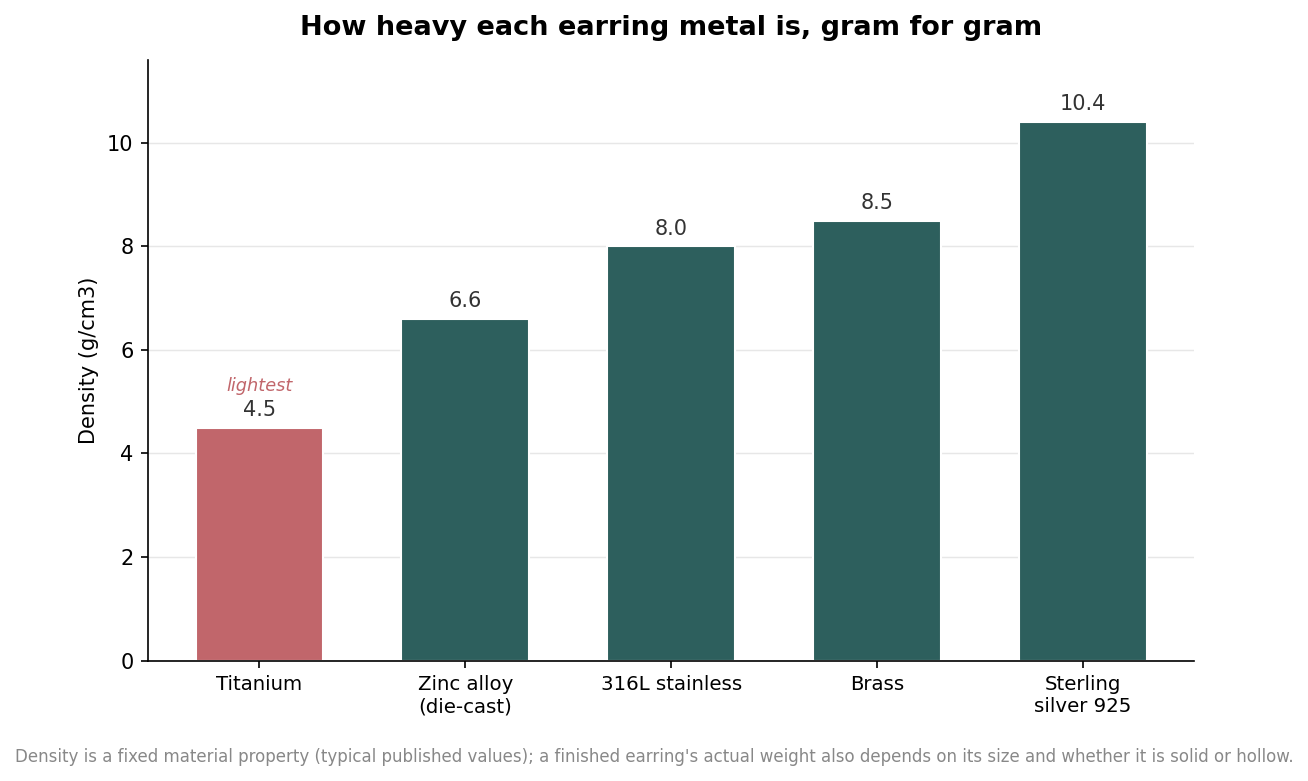
The weight chart above is a material property, not a finished-piece weight, but it explains a lot of the comfort difference between metals. Density does not change; a cubic centimeter of sterling silver simply weighs more than twice what the same volume of titanium does. How you use that fact depends on the earring: for small studs it barely registers, but for hoops and large drops it is the difference between all-day comfort and something that gets taken off by lunchtime.
Sterling silver: the precious-metal option
Sterling silver, stamped 925, is 92.5 percent pure silver alloyed with about 7.5 percent other metal, usually copper. It is nickel-free and reads as a genuine precious metal, which is exactly its appeal for a premium or heirloom line where customers expect real silver rather than plating over a base. The two honest drawbacks are tarnish and softness. Silver oxidizes with exposure to air and moisture and will need occasional polishing, so it is less suited to a set-and-forget fashion piece and better for keepsakes people care for. It is also softer than steel or titanium and can bend or dent, which argues for slightly more substantial construction on thin components. On cost it sits above the base metals and stainless, below titanium as a raw material in the common ranking, and its price also tracks the silver market.
Brass and zinc alloy: cheap, castable, and all about the plating
Most inexpensive fashion earrings are built on brass or zinc alloy, and both can look excellent when finished well. Brass, a copper-zinc alloy, casts and stamps cleanly and gives plating a warm base, but it oxidizes and can contain traces of other metals, so it is essentially always plated and should never be a bare post against skin. Zinc alloy, the die-cast metal behind a lot of detailed charms and shapes, is the cheapest option and reproduces fine relief beautifully, but it is soft, must be plated, and depends entirely on that coating for both looks and skin safety. With either metal, the plating is the product: ask about the plating thickness and the underplating, because a thin flash will wear through at contact points and expose a base metal you did not want touching skin. Used well, plated brass and zinc deliver the lowest per-piece cost and the most freedom in shape; used carelessly, they are where tarnish and reactions come from.
Choosing the metal for your line
Match the metal to the positioning. For a sensitive-skin or piercing-focused line, specify titanium, or a verified-passing 316L or sterling for non-post components, and keep anything entering a piercing nickel-free. For a durable everyday line at a fair price, 316L stainless steel is the sensible default. For a premium or gift line where customers want a real precious metal, sterling silver earns its higher cost and its care requirements. For high-volume fashion at the lowest cost and the widest range of cast shapes, plated brass or zinc alloy is the answer, provided you hold the plating to a real standard.
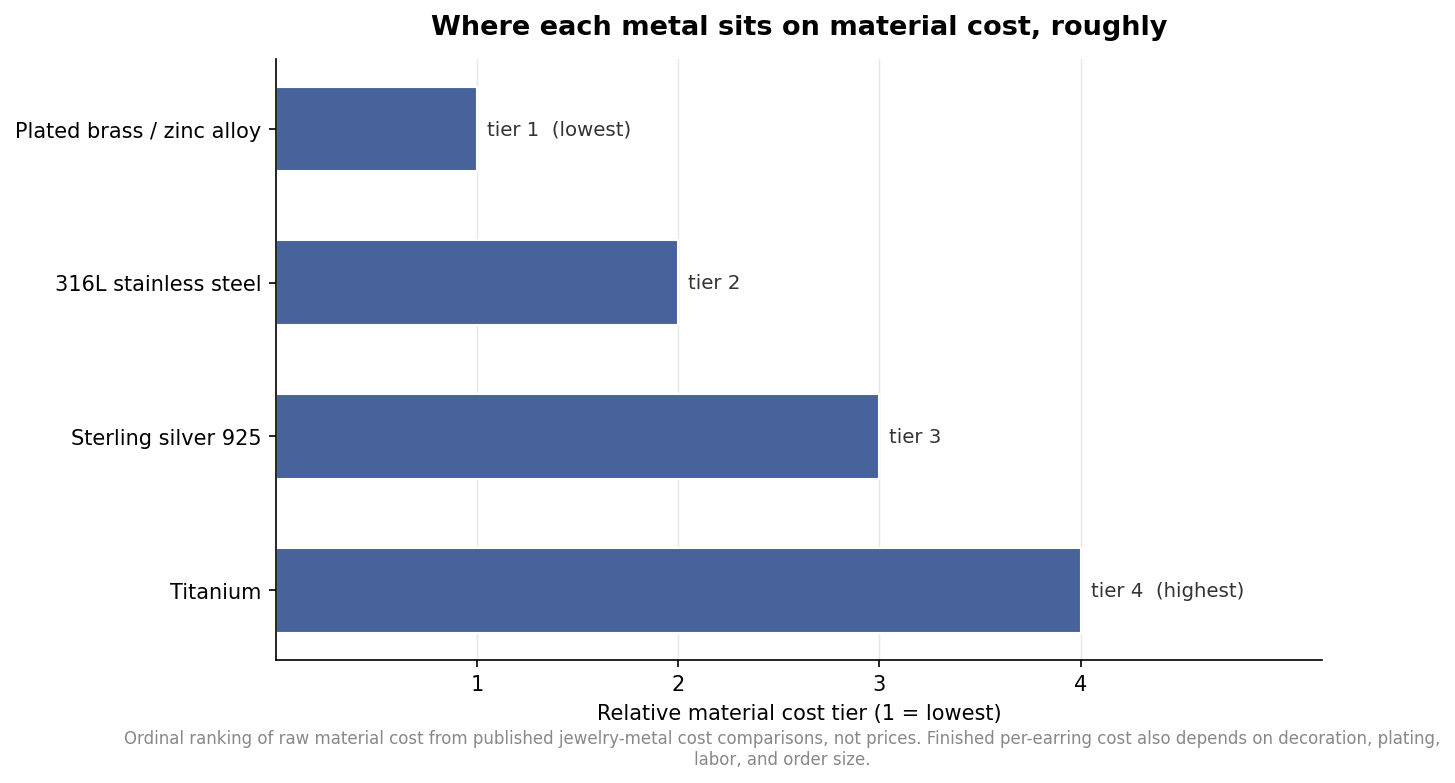
The cost chart is a rough ordering of raw material only, not a finished-earring price, and that distinction matters when you plan a range. Decoration, plating, findings, labor, and order quantity often move the final number more than the base metal does, which is why a well-made plated brass earring and a stainless one can land closer in price than the raw materials suggest. Decide the two things that are hard to change first, skin safety and the weight your designs need, then let cost and finish steer the rest. Get the base metal right and the plating honest, and the plating color, shape, and decoration become the easy, creative part of the run.